


About

An institution built to do something about it.

Sagga & Co. is a civic think tank and independent media institution based in Ottawa. It exists because a set of conversations about what was going wrong in this country eventually reached a conclusion neither of its founders could argue with: that talking about it is not enough.

How this started

Two people who could not watch the news without taking it personally.

Sagga & Co. was founded by Ghassan Sagga and his son Sultan, an Ottawa family who, for as long as either of them can remember, could not simply watch the news and let it pass.

The stories were always the same. Rising rents. Overcrowded hospitals. Policy failures leaving the most vulnerable further behind. And underneath all of it, a widening gap between those with power and those without it, and a growing distance between what institutions promised and what people actually experienced.

They talked about it constantly: the housing crisis, the failures of the healthcare system, the erosion of democratic trust. They did not simply follow what was happening. They studied it, traced it back to its structural roots, and asked the harder question: not only what was going wrong, but what a real solution would actually require.

Sultan brought something essential to those conversations: the perspective of someone living inside these failures in real time, watching his generation inherit a country whose systems were struggling to serve them. Walking through the capital of Canada and seeing, every day, the distance between the city’s public image and the reality facing the people around him.

The conversations grew more urgent. The problems were not improving. The divide kept widening. Families and vulnerable people were struggling in ways the official account rarely acknowledged.

At some point they both reached the same conclusion.

Talking about it isn’t enough. If we keep only talking, nothing changes. We have to actually do something.

So they built Sagga & Co. Not a think tank that produces reports and waits to be cited. Not an advocacy group that writes letters and hopes for a response. A working civic institution, one built to research, design, implement, and hold accountable.

One that takes the problems seriously enough to build real solutions, and takes the people affected by those problems seriously enough to see those solutions actually delivered.

The work starts in Ottawa. The mission extends well beyond it.

Parliament Hill above the Ottawa River at golden hour

The partners

Who does the work.

Experience without urgency produces careful papers nobody acts on. Urgency without experience produces demands nobody can implement. This institution sits where those two things meet.

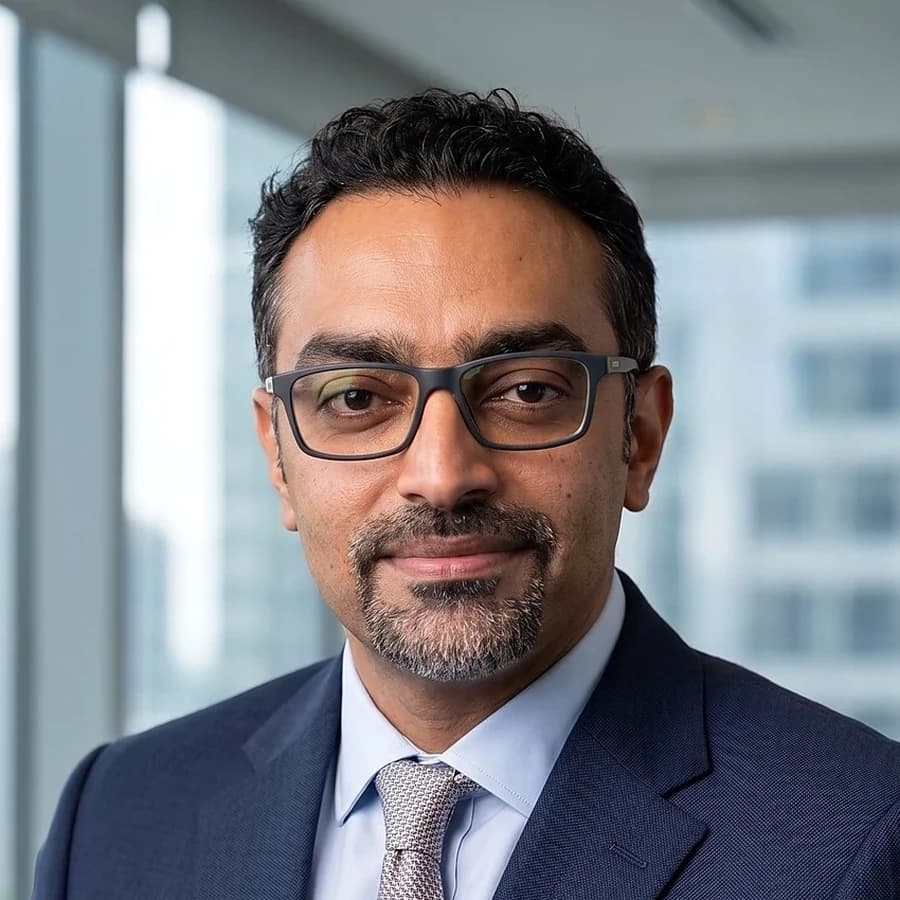
Ghassan Sagga

Co-founder

Ghassan Sagga

Principal

More than twenty years inside the legal and financial industry, with working relationships that now run to hundreds of lawyers across North America, the Caribbean and the Middle East, and a standing seat at the international forums and boardrooms where those relationships get tested against real companies and real deals.

His own ventures span finance, technology, law and artificial intelligence, a record that has put him across the table from presidents, cabinet ministers and diplomatic envoys as often as from bankers and boards. It is a career built on the same test each time: whether an idea can survive contact with capital, regulation and government moving at once, rather than negotiated one at a time.

That range is what he brings to the civic side: nothing here gets built on a grant that runs out or a subsidy that depends on the next election. Through VertAcc Solutions, the accounting and financial-systems company he founded, and its own engineering team, he builds the revenue and accounting architecture underneath each system we propose, so a civic platform has to answer the same question a business does: what pays for this next year, and the year after.

Sultan Sagga

Co-founder

Sultan Sagga

Operations & Strategy

Leads the day-to-day work of the institution, but the part of the job that shapes it most rarely happens at a desk. It happens in the neighbourhoods across Ottawa, at the kitchen tables, community centres and shop counters where a housing statistic turns back into somebody’s actual week.

That means showing up: sitting with residents to hear what a shortage or a wait list actually costs them, not just what it costs the system; bringing a camera and a notebook to document it through Sagga Media; and sitting across the table from the councillors, MPs, local business owners, charities and foundations who are already working the same problem, to find out what would actually move it.

He represents the generation that will live longest with whatever is decided over the next decade, and treats that as a mandate rather than a talking point: every solution this institution proposes has to survive being explained, in person, to the people it is meant to help.

Neither of them works this alone. Sagga & Co. sits inside a working network of like-minded people across the sectors any real system eventually has to pass through: doctors and public-health practitioners, engineers, lawyers, accountants, elected officials, the leadership of major NGOs and foundations, and diplomats moving between Ottawa and the countries where this work extends. It is that network which turns a proposal into something built: by the time an idea leaves this institution, it has usually already been argued with by someone qualified to break it.

How we work

Research, design, implement, hold accountable.

Most institutions do one of these. A university researches, a consultancy designs, a vendor implements, a newsroom holds to account, and the handoffs between them are where good work goes to die. We are built to carry a problem across all four.

01

Research

We begin with the household rather than the aggregate: what a family actually pays, waits for, or gives up. A proposal that solves the statistic while failing the person has not solved anything.

02

Design

Every concept names the instrument required to deliver it: a zoning amendment, a building-code pathway, a procurement change, a line in a budget. A recommendation nobody has the authority to act on is an opinion.

03

Implement

We build what we argue for. The civic platform, the legal structures and the editorial capacity exist so a proposal can be demonstrated rather than only described.

04

Hold accountable

Independent editorial capacity is the last step, not a separate business. An institution that publishes research but depends on the goodwill of the bodies it examines eventually stops examining them.

From Ottawa to the world

What began as a conversation about Canada turned out to be larger.

The failures they had spent years analysing (the hollowing out of public institutions, the concentration of wealth, the erosion of civic trust, systems that worked for some while failing others entirely) were not uniquely Canadian problems. They were symptoms of a global pattern. And if the ambition was to build genuinely better systems, the responsibility did not stop at the border.

That realisation brought them to Guyana. Not because Guyana is struggling, but because Guyana is rising: a nation with extraordinary potential, abundant resources, and a rare opportunity to build the right foundations at exactly the right moment. To grow into a strong, sovereign and prosperous country without repeating the mistakes that fully developed nations are still paying for today.

That is an opportunity worth being part of.

The Guyana initiative

A nation at its defining moment.

Guyana is not a country on the sidelines of history. It sits at the centre of one of the most significant economic transformations in the Western Hemisphere, a rapidly developing nation with extraordinary natural resources, a young and ambitious population, and a window of opportunity most countries never get.

But opportunity alone does not build a nation. Systems do.

When we began work in Guyana, the question was not simply how to support a growing country. It was deeper: how do you help a nation grow on its own terms? How do you ensure the wealth being generated reaches the people who live there, that the infrastructure being built serves citizens rather than only capital, and that the systems put in place are transparent, accountable and genuinely sovereign?

The developed world offers a lesson worth learning from. Decades of short-term thinking, and systems designed around extraction rather than equity, have left even the wealthiest nations grappling with inequality and eroding public trust. Guyana has something those countries did not: the chance to look at all of that, learn from it, and build with intention from the beginning.

That is precisely what we are there to support. The work is hands-on and partnership-driven, built around a clear mission: to help design and implement the digital infrastructure, economic frameworks and civic systems that give Guyana a foundation for long-term sovereign prosperity. The kind of prosperity felt not only in economic figures, but in daily life: the ease of doing business, the reliability of services, the equity of opportunity, and the strength of institutions built to serve the people inside them.

It is the same mission we carry in Canada, applied to a nation whose moment is now. We take that responsibility seriously.

Read about the Guyana engagement

What we hold to

Four commitments that cost us something.

Principles only mean anything where they constrain a decision. Each of these rules out something that would otherwise be easier or more profitable.

Published, not sold

Our policy work is released for public use rather than produced for a client. That carries a real cost and a real purpose: the analysis answers to the problem rather than to whoever commissioned it.

Specific enough to be wrong

We would rather publish a proposal precise enough to be argued with than a position broad enough to be unfalsifiable. Where our figures are illustrative, we say so on the page.

Long horizons

Most of what we work on will not resolve inside an electoral cycle. Housing supply, health-system capacity and democratic trust are decade problems, and we would rather be useful in ten years than loud this quarter.

Build, don't only advise

It is easy to recommend a system and never carry the cost of running one. Wherever we can, we build the thing, because the real constraints only become visible once you do.

Get Involved

The work is easier with more people in it.

We work with researchers, technologists, journalists, students, and citizens who would rather build the alternative than describe the problem.

Start a Conversation